Derealisation
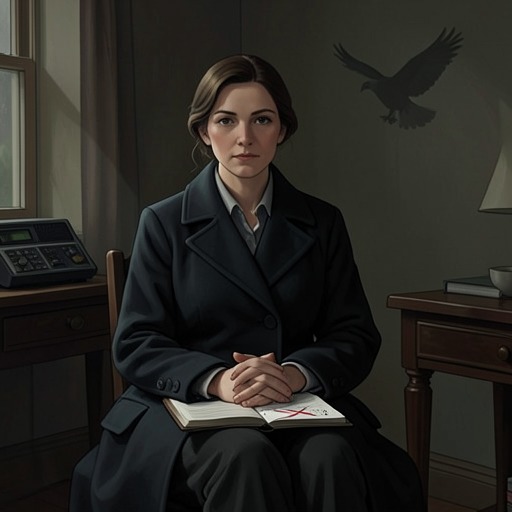
H is for HawkDerealisation is a recurring disruption of perception in Helen Macdonald’s account of life after her father’s death. Familiar surroundings can seem emptied of their ordinary meaning, while her sense of who she is becomes uncertain; the practical demands of flying Mabel provide a counterpoint, though not a cure.
Onset and Perceptual Disruption
Helen describes bouts of derealisation that began after her father died. In one episode, she watches doves rise from a college roof and experiences sudden vertigo; the buildings remain physically unchanged, but no longer feel familiar or recognizably like a college. Their objects and architecture seem assembled from dreams: painted angels, a bronze cockerel, a skeleton kept in a cupboard, clipped yews, and sculpted animals. The shift is not presented as a change in the place itself but as a fracture in her ability to experience it as ordinary.
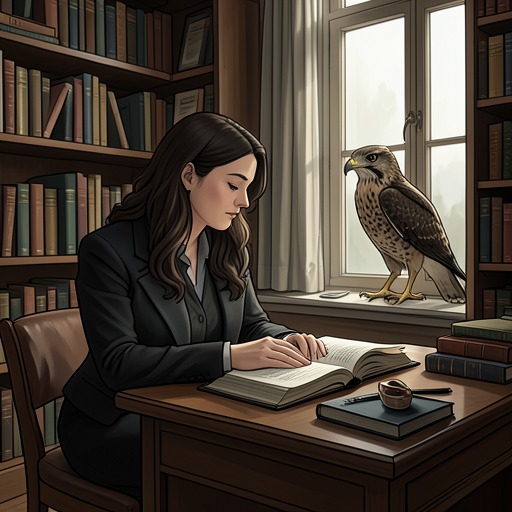
The episode unsettles her at a moment when her future already feels precarious. Her Cambridge fellowship is due to end, and she expects to lose her office, salary, and home. She has declined a university job in Berlin, telling the university that her father’s death required her to stay, though her immediate reason is that she has a hawk to fly. The contrast between an expected academic future and her absorption in falconry intensifies the sense that familiar plans and identities no longer hold.
Falconry as a Practical Anchor
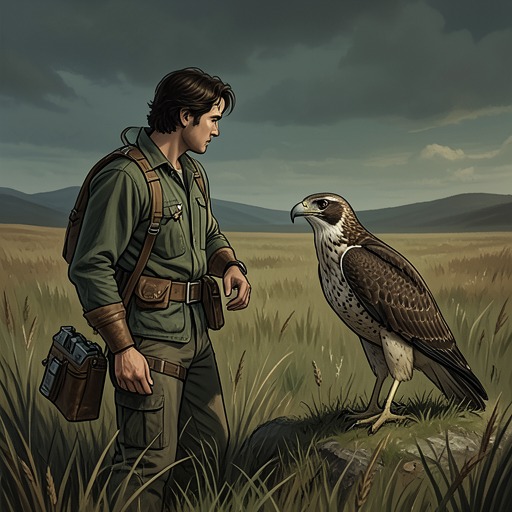
After the episode, Helen deliberately redirects her attention to the task before her. She threads the creance through the swivel on Mabel’s jesses, ties two falconer’s knots, tests that they hold, and secures the remaining line and leash in her waistcoat pockets. These ordered actions offer material reassurance: knots can be checked, and the line can be kept secure. The passage does not suggest that the episode has ended so much as show Helen using a concrete routine to continue despite it.
She then calls Mabel from a veranda rail to her gloved hand with food. The first short flight is followed by another from a greater distance; on the third attempt, Mabel launches before Helen has turned back toward her. The sequence gives Helen an immediate, demanding focus. Its measured repetitions contrast with the sudden unreliability of her perception, while the hawk’s response remains specific and observable.
Identity and Unreality at the Luncheon
A later episode occurs during a summer lunch, as guests watch Helen’s hawk feed. Her vision blurs, and she feels detached from the identity she had held as a historian and Research Fellow. In her account, she sees herself instead as a Fool or as the hawk woman: a public role formed around the bird that seems to displace her former professional self. The shift makes derealisation not only a disturbance of place but also a disturbance of social identity.
The luncheon appears to belong to another era, like an image from an old album, yet the hawk and the wasps around it remain insistently present. That distinction matters: the scene does not become wholly unreal. Rather, Helen cannot locate herself securely within it. She describes feeling hollow and unhoused, an image that links the episode to her wider loss of stability without presenting the hawk as a simple remedy.
Significance
Across these episodes, derealisation registers bereavement through changes in perception and belonging. The college’s familiar objects turn strange; an anticipated career no longer seems to describe Helen; and, at lunch, the identity attached to her hawk appears to replace the academic one. Falconry supplies procedures and events she can attend to, but the episodes expose the limits of that anchor: she can secure the line and call Mabel, while still remaining unsure of her place in the world around her.